





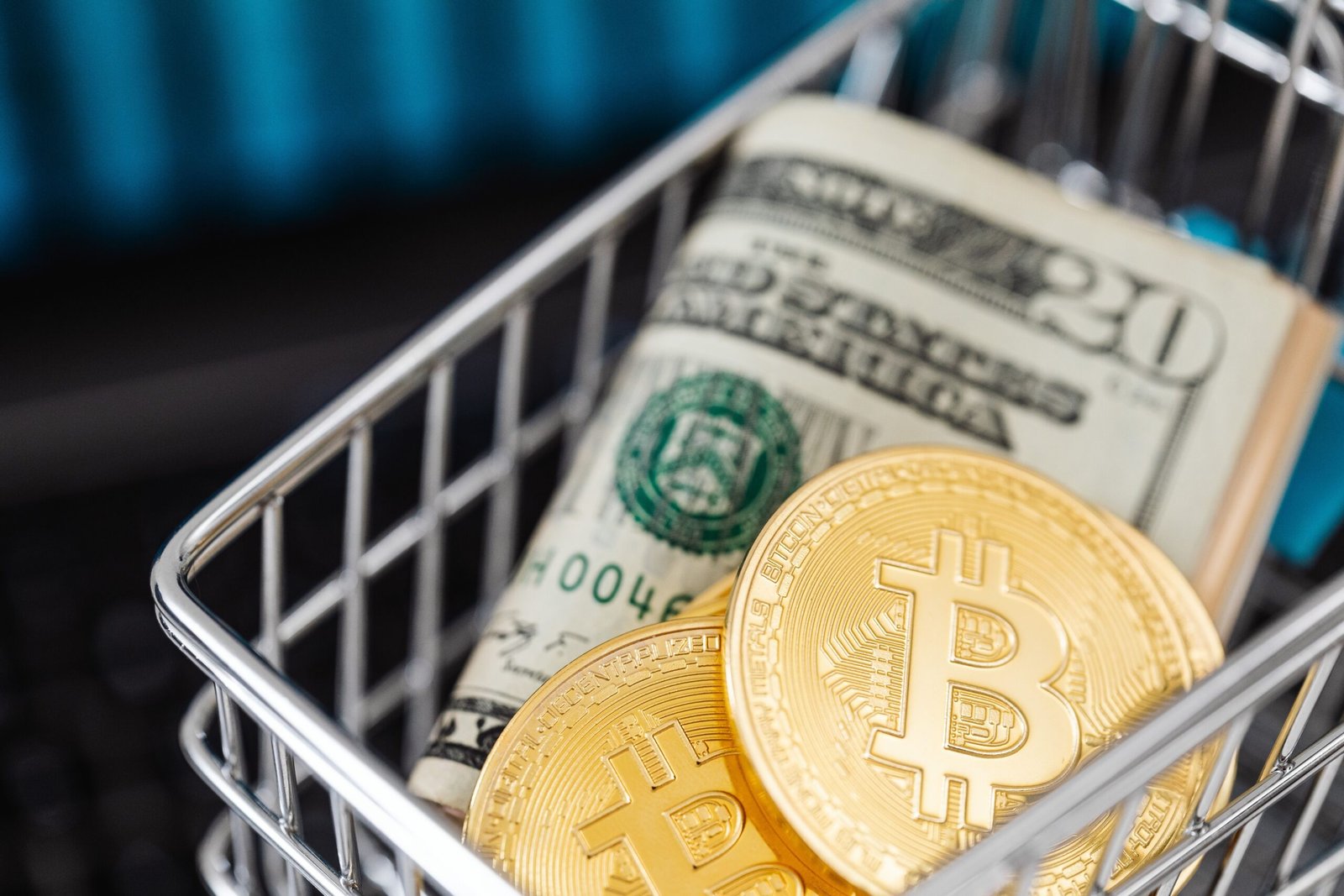
Buying Bitcoin for the first time can feel exciting, especially if you have only recently started learning about cryptocurrency. You choose an amount, complete the purchase and suddenly see Bitcoin (BTC) in your account. But what actually happens behind the scenes? Where does your money go, where is the Bitcoin stored, and how do you know the purchase was successful?
Unlike buying shares through a traditional brokerage account, purchasing Bitcoin involves a digital asset that operates on a blockchain network. Depending on the platform you use, the Bitcoin may be held by an exchange on your behalf or transferred to a personal wallet that you control.
Understanding what happens after your first purchase can help you avoid common mistakes and manage your cryptocurrency more confidently.
Let’s walk through the process step by step.
1. You Choose a Platform to Buy Bitcoin
The first step is selecting a platform where you can purchase Bitcoin. Many beginners use a cryptocurrency exchange because it provides an interface for creating an account, adding funds and buying digital assets.
Other services allow users to purchase Bitcoin directly through a wallet application.
Before choosing a platform, consider:
- Whether it operates legally in your location.
- Which payment methods it supports.
- Its trading, deposit and withdrawal fees.
- Its security features and account protection.
- Whether you can withdraw Bitcoin to an external wallet.
- Its reputation and customer support options.
Avoid choosing a platform simply because it advertises unusually high returns, free Bitcoin or guaranteed profits. Buying Bitcoin does not guarantee that its value will increase.
2. You Create an Account and Complete Verification
After selecting a platform, you may need to create an account using your email address or mobile number.
Many regulated cryptocurrency services require identity verification, commonly known as Know Your Customer (KYC). The exact requirements depend on the platform and the country where you live.
The verification process may involve:
- Providing your personal details.
- Submitting an accepted identity document.
- Completing a selfie or face-verification check.
- Confirming your email address or phone number.
- Providing additional information when requested.
Once the platform approves your account, you can access the available purchase options.
For security, use a unique password and enable two-factor authentication wherever possible.
3. You Add Money to Your Account
Before buying Bitcoin, you generally need to fund your account or select a payment method.
Depending on the service and your location, available options may include:
- Bank transfers.
- Debit or credit cards.
- Supported digital payment services.
- Other locally available payment methods.
Some platforms allow users to buy Bitcoin directly through a supported payment method without maintaining a separate cash balance.
Check the payment conditions before proceeding. A bank or payment provider may charge additional fees, and some deposits may take time to become available.
4. You Decide How Much Bitcoin to Buy
One common misunderstanding among beginners is that they need to purchase one complete Bitcoin.
That is not true.
Bitcoin is divisible into smaller units called satoshis. One Bitcoin contains 100 million satoshis, so users can purchase a fraction of a BTC.
For example, imagine Bitcoin is priced at $100,000. These amounts would represent different fractions of one Bitcoin, before fees and price changes:
| Amount Spent | Approximate Bitcoin |
|---|---|
| $10 | 0.0001 BTC |
| $50 | 0.0005 BTC |
| $100 | 0.001 BTC |
| $500 | 0.005 BTC |
| $1,000 | 0.01 BTC |
These are illustrative calculations, not live market prices.
The platform usually calculates how much BTC you will receive based on the current quoted price. The final amount may be lower after trading fees, payment charges or differences between the quoted and executed price.
5. You Review and Confirm the Purchase
Once you enter the amount, the platform displays the order details.
This is an important step because the amount you pay is not always the same as the market value of the Bitcoin you receive.
Before confirming, review:
- The Bitcoin purchase amount.
- The quoted exchange rate.
- Trading or transaction fees.
- Any payment processing charges.
- The estimated BTC you will receive.
- The payment method being used.
Some platforms offer a simple buy option, while others provide different order types.
A market order generally attempts to buy at the best available market price. A limit order lets you specify the price at which you are willing to buy, but it may not execute if the market does not reach that price.
After reviewing the details, you confirm the order. The platform then processes the payment and purchase.
6. Your Bitcoin Appears in Your Account
After a successful purchase, you should see your BTC balance in the platform’s wallet or account.
This is where an important distinction comes into play: buying Bitcoin on an exchange does not necessarily mean that a separate Bitcoin blockchain transaction has immediately taken place.
If you purchase through a centralised exchange, the platform may update your account balance internally. It holds the Bitcoin and maintains a record showing how much BTC belongs to your account.
If you purchase directly into a self-custody wallet, the service may arrange a blockchain transfer to your wallet address.
The two arrangements are different:
| Feature | Exchange Account | Self-Custody Wallet |
|---|---|---|
| Who controls the private keys? | Usually the exchange | You |
| Access | Through your exchange account | Through your wallet |
| Recovery | Depends on platform policies | Depends on your recovery backup |
| Main responsibility | Platform and account security | Your own key and backup security |
| External transfers | Subject to platform withdrawal rules | You can initiate supported transactions |
An exchange account may be convenient for beginners, while self-custody provides direct control over the wallet’s private keys. Both approaches have different risks and responsibilities.
7. You Learn What a Bitcoin Wallet Actually Does
A cryptocurrency wallet does not store Bitcoin in the same way that a physical wallet stores cash.
Bitcoin ownership is represented through records on the Bitcoin blockchain. A wallet manages the keys needed to access and authorise transactions involving Bitcoin associated with your addresses.
There are two important concepts to understand:
Public address: This is an address that you can share with someone who wants to send you Bitcoin.
Private key: This is secret information used to authorise spending. Anyone who gains control of the relevant private key may be able to spend the associated Bitcoin.
Many self-custody wallets also provide a recovery phrase. This phrase can restore wallet access if you lose your device, so it must be kept private and secure.
Never share your recovery phrase with anyone claiming to be customer support.
8. Your Bitcoin Transaction Is Recorded on the Blockchain
If your purchase involves an on-chain Bitcoin transfer, the transaction must be processed by the Bitcoin network.
Here is a simplified explanation of what happens:
- A transaction is created and authorised using the relevant private key.
- The transaction is broadcast to the Bitcoin network.
- Network nodes check whether it follows Bitcoin’s rules.
- A valid transaction can wait in a collection of unconfirmed transactions called the mempool.
- A miner includes it in a block.
- The network accepts the block, giving the transaction its first confirmation.
- Additional blocks provide further confirmations.
The blockchain acts as a shared public record of confirmed Bitcoin transactions. It allows network participants to independently verify transfers without relying on a single bank or payment processor.
An exchange purchase that only updates your internal account balance may not create an individual on-chain transaction at the moment you buy. You may see a blockchain transaction later when you withdraw Bitcoin to an external wallet.
9. You May Need to Wait for Confirmation
When Bitcoin is transferred through the blockchain, it does not always become confirmed immediately.
Bitcoin blocks are added approximately every ten minutes on average, but this is not a guaranteed waiting time. Network activity and the transaction fee can influence how quickly a transaction receives its first confirmation.
You can usually check the transaction status using a Bitcoin block explorer if you have its transaction ID.
Common transaction statuses include:
- Unconfirmed: The transaction has been broadcast but has not yet been included in a block.
- Confirmed: The transaction has been included in an accepted block.
- Multiple confirmations: Additional blocks have been added after the transaction’s block.
For an exchange purchase, the platform may credit your account according to its own processing rules rather than waiting for a separate transaction to appear on the public blockchain.
10. You Can Track Your Bitcoin Holdings
After buying Bitcoin, you can monitor its value through your exchange account or wallet application.
Most platforms display:
- Your total BTC balance.
- The current estimated market value.
- Your average purchase price.
- Recent transactions.
- Your profit or loss relative to the displayed purchase cost.
For example, if you buy 0.01 BTC and the market price increases, the estimated value of your holdings rises. If the market price falls, the estimated value decreases.
Remember that an increase in displayed value does not mean you have earned a realised profit. You generally realise a gain or loss when you sell or otherwise dispose of the asset, subject to the applicable rules in your jurisdiction.
11. Bitcoin’s Price Can Change After Your Purchase
One of the first things new Bitcoin buyers notice is that the value of their holdings can change throughout the day.
Bitcoin trades in global markets, and its price can move because of several factors:
- Demand from individual and institutional investors.
- Broader cryptocurrency market conditions.
- Economic announcements and interest-rate expectations.
- Regulatory developments.
- Market liquidity and trading activity.
- Investor sentiment and major industry events.
Suppose you purchase Bitcoin worth $100. If its market value rises by 10%, your holding would be worth approximately $110 before fees. If the market falls by 10%, it would be worth approximately $90.
This example shows why Bitcoin should not be treated as a guaranteed short-term investment. Only use money you can afford to put at risk, and understand that significant losses are possible.
12. You Decide Whether to Hold, Sell or Transfer It
After your first purchase, you have several choices.
Hold your Bitcoin: You can keep your BTC in an exchange account or transfer it to a self-custody wallet. Your decision should consider security, convenience and the amount you hold.
Sell your Bitcoin: You can place a sell order through a supported platform. The proceeds may be credited to your exchange balance or processed through an available withdrawal method.
Transfer your Bitcoin: You can withdraw BTC to another compatible Bitcoin wallet. This usually involves a blockchain transaction and a network fee.
Before transferring, carefully check the destination address and make sure you select the correct network. Sending Bitcoin to an incompatible address or making an irreversible mistake can result in permanent loss.
Common Mistakes to Avoid After Buying Your First Bitcoin
New investors sometimes focus so much on completing their first purchase that they overlook the security responsibilities that follow.
Here are some mistakes worth avoiding:
| Common Mistake | Why It Is Risky | Better Practice |
|---|---|---|
| Sharing a recovery phrase | Someone may gain control of your wallet | Keep it private and offline |
| Buying through unknown platforms | Fake services may steal money or personal information | Research the platform first |
| Ignoring transaction fees | You may receive less BTC than expected | Review the final order details |
| Sending BTC to the wrong address | Blockchain transfers are generally irreversible | Verify the destination carefully |
| Panic buying or selling | Emotional decisions can increase losses | Follow a clear financial plan |
| Believing guaranteed-return claims | Crypto markets are unpredictable | Be cautious of unrealistic promises |
| Ignoring account security | Weak passwords can expose your account | Use unique passwords and 2FA |
What Should You Do Immediately After Your First Bitcoin Purchase?
Once your purchase is complete, take a few minutes to review your account and security settings.
- Confirm that the correct BTC amount appears in your account.
- Save your purchase confirmation and transaction details.
- Enable two-factor authentication on your exchange account.
- Review withdrawal and account-security settings.
- Learn how the platform handles Bitcoin withdrawals.
- Understand where your Bitcoin is held and who controls the private keys.
- If using self-custody, back up your recovery phrase securely.
- Avoid responding to unsolicited messages offering investment advice or wallet assistance.
You do not need to rush into trading, transferring or buying more Bitcoin immediately. Understanding how your first purchase works is already an important step.
Final Thoughts
Buying your first Bitcoin is more than simply pressing a purchase button. You create an account, complete any required verification, choose a payment method, review the price and fees, and receive BTC through an exchange account or a personal wallet.
The most important thing to understand is where your Bitcoin is held and who controls the private keys. An exchange may manage custody on your behalf, while a self-custody wallet gives you direct responsibility for securing your assets.
Start with an amount you can afford to risk, learn how Bitcoin transactions work and take wallet security seriously. A careful first purchase can help you build a better understanding of cryptocurrency before making further decisions.
Enjoying Cryptorevery?
If you find our crypto insights and market updates helpful, add Cryptorevery as a Preferred Source on Google to see more of our latest content.
Found this article useful?
If this content helped you, you may support the developer by contributing the cost of a coffee.
Pay $5

